
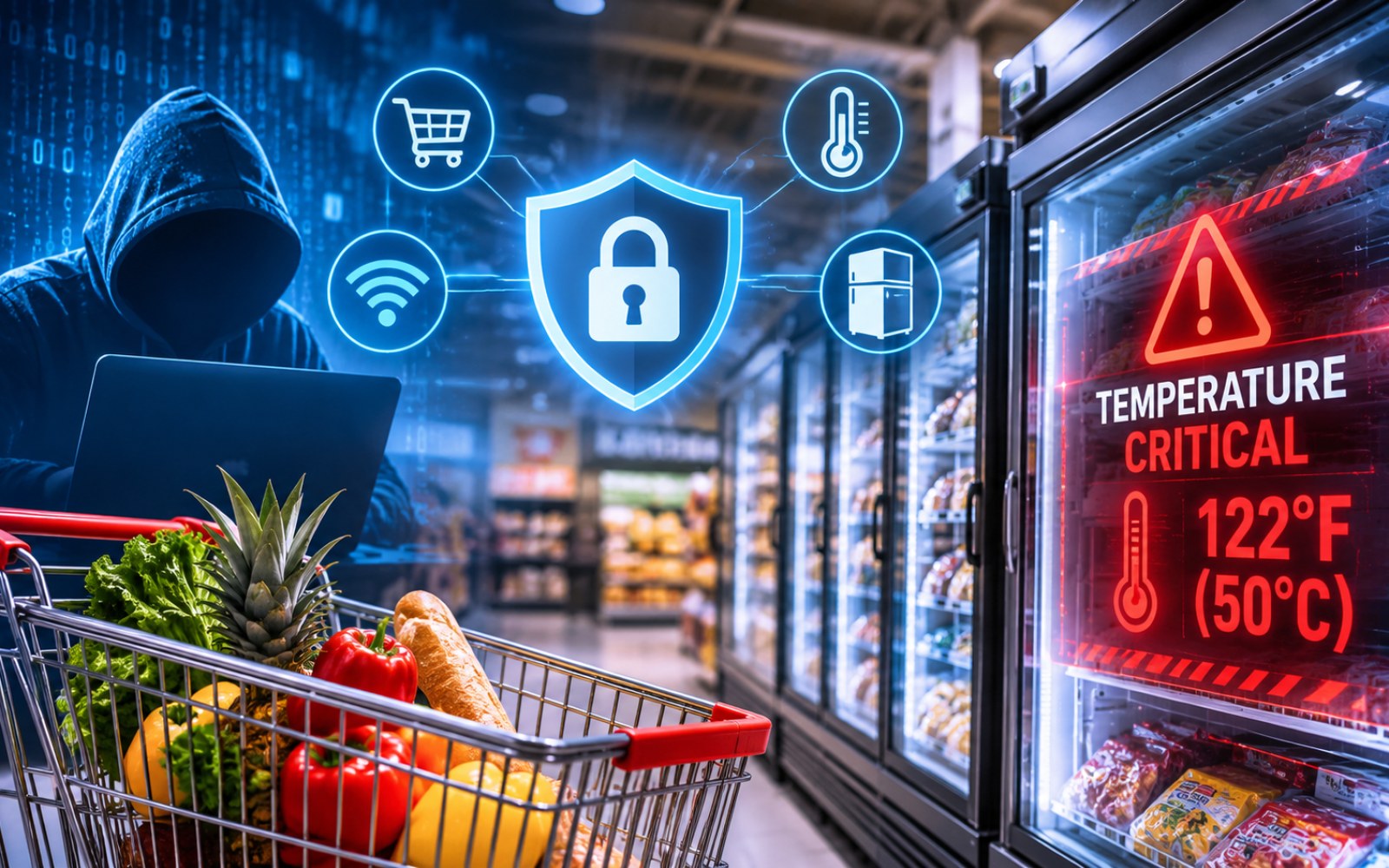
Cybersecurity threats are no longer limited to computers, corporate databases or financial institutions. As everyday businesses become increasingly connected to the internet, even essential equipment such as supermarket refrigerators and temperature-control systems can become targets of cyberattacks.
Recent incidents involving supermarkets across Europe have highlighted how vulnerable connected devices can be and how cybercriminals could potentially exploit these weaknesses to disrupt everyday services.
How Can a Supermarket Refrigerator Become a Cybersecurity Target?
Modern supermarkets rely on connected technologies to monitor refrigeration temperatures, manage inventory and maintain food storage conditions.
These systems offer convenience and operational efficiency. However, when devices are connected to the internet without sufficient security protection, they can create opportunities for unauthorised access.
According to a report published by Newswise, cyberattacks targeting supermarket refrigeration systems and smart temperature controllers across Europe remotely manipulated temperature settings. Some systems reportedly reached temperatures as high as 122°F (50°C), resulting in spoiled food, equipment damage and significant financial losses.
The incidents demonstrate that cyberattacks can have consequences beyond digital information theft. They can directly affect physical operations, businesses and consumers.
Why Are Connected Devices Vulnerable?
Many Internet of Things (IoT) devices and operational technology systems are developed by different manufacturers, each using its own software and firmware.
Some devices may have:
Weak or unchanged default passwords.
Outdated software and firmware.
Inadequate security updates.
Poor network access controls.
Insufficient monitoring of remote connections.
When these weaknesses remain unresolved, attackers may exploit them to gain access to connected systems.
The bigger concern is that a single security weakness could potentially affect multiple locations when businesses rely on similar equipment, software or third-party service providers.
How Could Artificial Intelligence Amplify Cyber Threats?
Artificial intelligence is transforming many industries, including cybersecurity. While AI offers valuable tools for identifying threats and strengthening digital protection, it can also make certain cyberattacks easier to execute.
AI-assisted tools may help malicious actors identify security weaknesses, analyse systems and automate parts of an attack.
Tasks that previously required considerable technical knowledge and time could become more accessible to individuals with less cybersecurity expertise.
However, it is important to note that there is no confirmed evidence that AI was responsible for the supermarket attacks described in the Newswise report. The incidents instead highlight the broader cybersecurity challenges that businesses may face as AI capabilities continue to develop.
What Can Businesses Do to Strengthen Their Cybersecurity?
As businesses increasingly depend on connected technologies, cybersecurity should be treated as an essential part of operational management.
Organisations can take several practical steps:
Strengthen access protection: Replace default passwords with strong, unique credentials and implement multi-factor authentication where supported.
Update software regularly: Ensure devices, applications and firmware receive security patches.
Monitor connected devices: Maintain an inventory of internet-connected equipment and regularly review network access.
Secure remote access: Restrict access to authorised personnel and trusted service providers.
Prepare recovery plans: Establish backup procedures and manual alternatives to maintain essential operations during system disruptions.
Work with technology providers: Ensure third-party vendors follow appropriate cybersecurity standards.
Building a Safer Digital Future
The growing connection between physical infrastructure and digital technology brings enormous opportunities for businesses. However, it also introduces risks that cannot be overlooked.
The supermarket incidents serve as an important reminder that cybersecurity is not exclusively an IT department responsibility. It is a business-wide concern that involves technology providers, management, employees and consumers.
As artificial intelligence continues to evolve, organisations must move beyond simply adopting digital solutions. They must also ensure that the systems supporting their operations are designed, maintained and monitored with security in mind.
The future of digital innovation depends not only on how connected our world becomes, but also on how securely we protect those connections.Cybersecurity threats are no longer limited to computers, corporate databases or financial institutions. As everyday businesses become increasingly connected to the internet, even essential equipment such as supermarket refrigerators and temperature-control systems can become targets of cyberattacks.
Recent incidents involving supermarkets across Europe have highlighted how vulnerable connected devices can be and how cybercriminals could potentially exploit these weaknesses to disrupt everyday services.
How Can a Supermarket Refrigerator Become a Cybersecurity Target?
Modern supermarkets rely on connected technologies to monitor refrigeration temperatures, manage inventory and maintain food storage conditions.
These systems offer convenience and operational efficiency. However, when devices are connected to the internet without sufficient security protection, they can create opportunities for unauthorised access.
According to a report published by Newswise, cyberattacks targeting supermarket refrigeration systems and smart temperature controllers across Europe remotely manipulated temperature settings. Some systems reportedly reached temperatures as high as 122°F (50°C), resulting in spoiled food, equipment damage and significant financial losses.
The incidents demonstrate that cyberattacks can have consequences beyond digital information theft. They can directly affect physical operations, businesses and consumers.
Why Are Connected Devices Vulnerable?
Many Internet of Things (IoT) devices and operational technology systems are developed by different manufacturers, each using its own software and firmware.
Some devices may have:
Weak or unchanged default passwords.
Outdated software and firmware.
Inadequate security updates.
Poor network access controls.
Insufficient monitoring of remote connections.
When these weaknesses remain unresolved, attackers may exploit them to gain access to connected systems.
The bigger concern is that a single security weakness could potentially affect multiple locations when businesses rely on similar equipment, software or third-party service providers.
How Could Artificial Intelligence Amplify Cyber Threats?
Artificial intelligence is transforming many industries, including cybersecurity. While AI offers valuable tools for identifying threats and strengthening digital protection, it can also make certain cyberattacks easier to execute.
AI-assisted tools may help malicious actors identify security weaknesses, analyse systems and automate parts of an attack.
Tasks that previously required considerable technical knowledge and time could become more accessible to individuals with less cybersecurity expertise.
However, it is important to note that there is no confirmed evidence that AI was responsible for the supermarket attacks described in the Newswise report. The incidents instead highlight the broader cybersecurity challenges that businesses may face as AI capabilities continue to develop.
What Can Businesses Do to Strengthen Their Cybersecurity?
As businesses increasingly depend on connected technologies, cybersecurity should be treated as an essential part of operational management.
Organisations can take several practical steps:
Strengthen access protection: Replace default passwords with strong, unique credentials and implement multi-factor authentication where supported.
Update software regularly: Ensure devices, applications and firmware receive security patches.
Monitor connected devices: Maintain an inventory of internet-connected equipment and regularly review network access.
Secure remote access: Restrict access to authorised personnel and trusted service providers.
Prepare recovery plans: Establish backup procedures and manual alternatives to maintain essential operations during system disruptions.
Work with technology providers: Ensure third-party vendors follow appropriate cybersecurity standards.
Building a Safer Digital Future
The growing connection between physical infrastructure and digital technology brings enormous opportunities for businesses. However, it also introduces risks that cannot be overlooked.
The supermarket incidents serve as an important reminder that cybersecurity is not exclusively an IT department responsibility. It is a business-wide concern that involves technology providers, management, employees and consumers.
As artificial intelligence continues to evolve, organisations must move beyond simply adopting digital solutions. They must also ensure that the systems supporting their operations are designed, maintained and monitored with security in mind.
The future of digital innovation depends not only on how connected our world becomes, but also on how securely we protect those connections.